On Notes From the New World, human design business strategist Keolani Young moves past type and gates to the part that actually changes how you work, how your mind takes in information, and what it costs to keep building against it.
You have the calendar. You have the content pillars. You took the course that mapped the funnel. And still you sit down to record and nothing comes.
Episode 303 of Notes From the New World offers an explanation that has nothing to do with discipline. Host Chelsea Riffe spends 57 minutes with Keolani Young, a human design guide and business mentor, on a concept called Variable. Whether you arrive a believer or a skeptic, the observation underneath it, lands.
A Different Way Into Human Design
Most human design content stops at type. Generator, projector, manifestor, reflector. Then gates and channels, and somewhere in there it becomes a vocabulary people use to describe themselves rather than a tool they use to change anything.
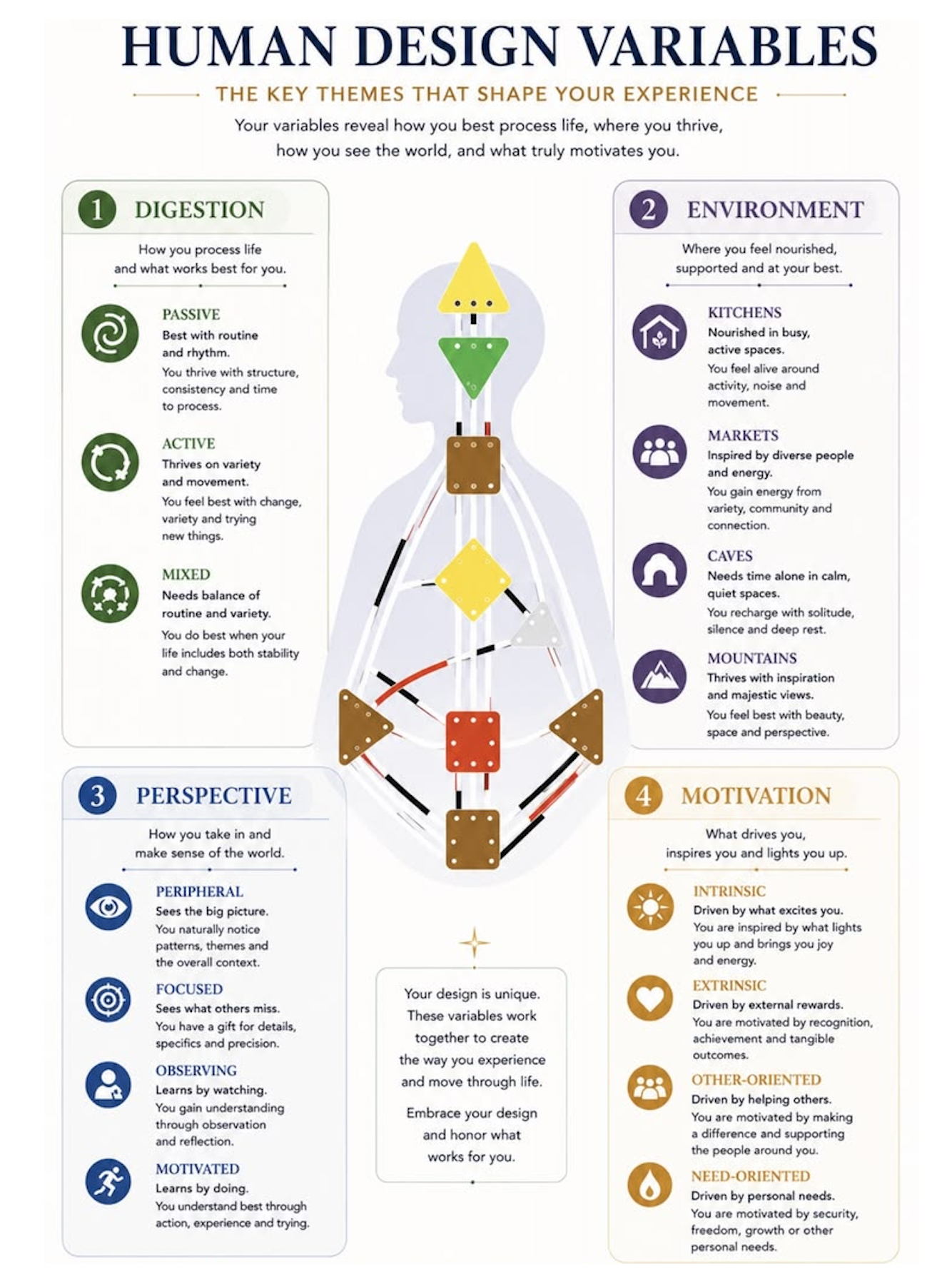
Young works a layer deeper, in what practitioners call Variable: the part of the chart concerned with how a person takes in information, which environments support their creativity, and what perspective they’re operating from.
Riffe is upfront that this is human design 2.0 territory. The conversation stays usable anyway, which is the whole point of having Young on.

Strategic Minds and Receptive Minds
The core distinction is between two ways of holding and retrieving information.
A strategic mind is active, focused and linear. It studies, retains, and can retrace its own line of thinking to find where something came from. Ask it to produce on demand and it goes and gets the material.
A receptive mind absorbs everything, peripherally, without much structure, and then waits. The information is there. It just doesn’t come out on command. It comes when something pulls it: a question, a conversation, a client saying something that makes a thought surface.
Young describes sitting down to make content and genuinely wondering whether she knows anything about human design at all. Put her in conversation and it’s all there.

Why the Advice Keeps Failing
This is where the episode earns its place.
Nearly all content advice is written for a strategic mind. Batch your posts. Sit down Sunday and plan the month. Build the calendar and fill it. Every one of those instructions assumes someone who can summon material deliberately.
If you’re wired the other way, following that advice produces one result: a blank screen, and the conclusion that you’re undisciplined. Young’s framing offers a less punishing read. The method is wrong for you, not the other way around.
Riffe names the version most founders will recognize. Newsletters, podcasts, Instagram, multi-platform visibility, all of it at once, and a steady drain with very little to show.

What To Do With It
The practical move is to change the input rather than the effort.
If your material only arrives when something prompts it, build prompting into the process. Record conversations instead of monologues. Have someone interview you and cut the transcript into pieces. Keep notes from client calls, because that is where the thinking is actually happening.
Young also suggests working alongside the opposite mind, a friend, a partner, a business peer who asks the right question and pulls the thing out of you. Neither mode outranks the other. Most strong creative partnerships are quietly built on the pairing.
A free advanced chart is linked in the episode description if you want to see which way your own variables face.
Why This Episode Matters Right Now
Human design is a framework, not a diagnosis, and it holds up better when held loosely.
What survives regardless is the observation underneath it. Some people generate on demand and some generate in response, and nearly the entire creator economy is built on the assumption that everyone is the first kind. A founder who has spent two years feeling broken because she can’t batch content is being offered a better explanation than the one she’s been carrying.