The Breadwinners Are Rewriting the Story of Working Motherhood
How Alexis Contos built a community that replaces guilt with confidence…
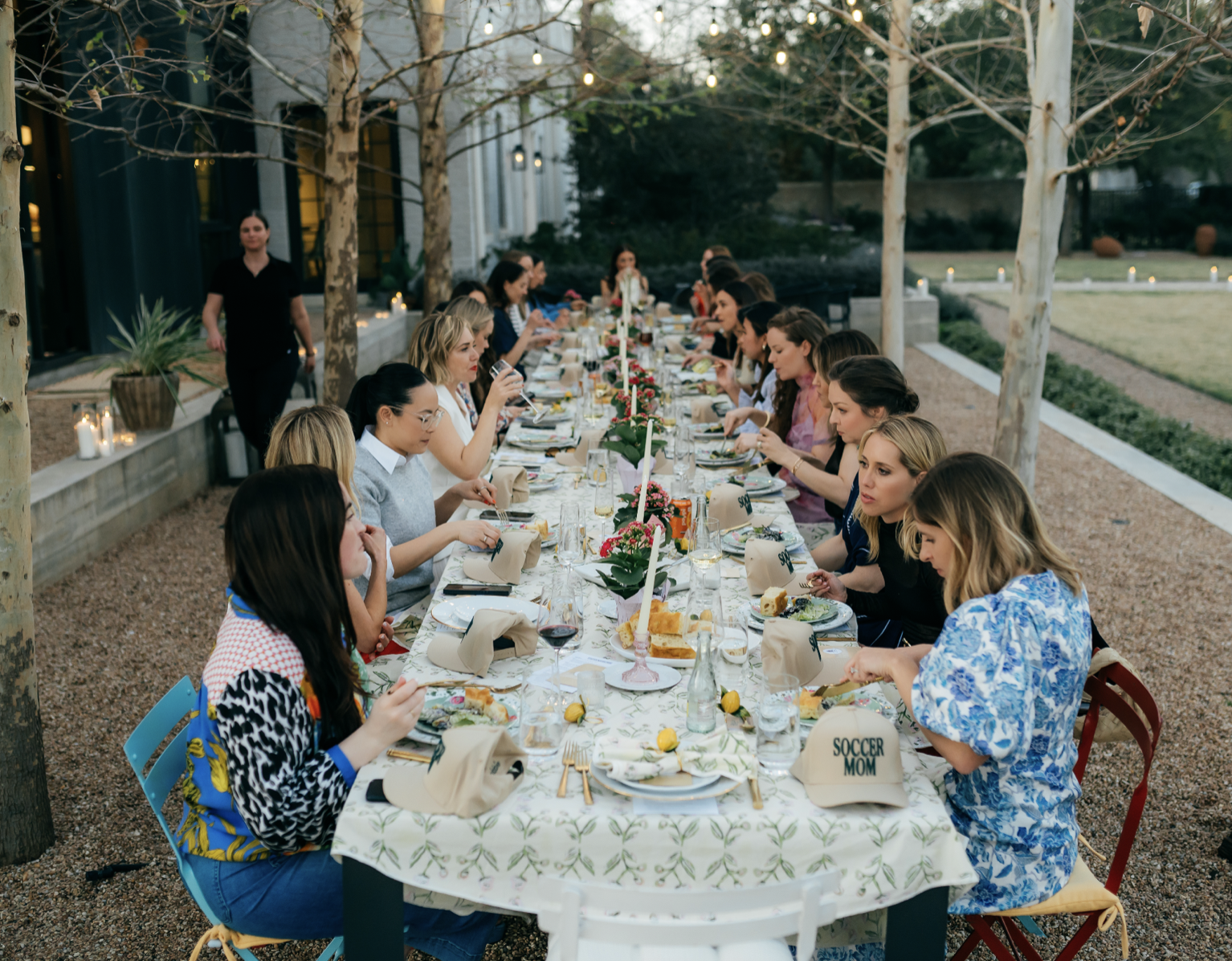
What happens when women stop apologizing for wanting more and start gathering around shared truth? For Alexis Contos, the answer began with a single dinner in Austin. Thirty women sat down together during SXSW in March 2025, and something shifted. These were founders, executives, creatives, and mothers who were not struggling to choose between ambition and presence. They were already living both.
That night revealed something powerful. The problem was never that working motherhood was broken. The problem was that the narrative around it was.
From Footnote to Headline
The Breadwinners exists to do one thing well: move working mothers from the margins to the center of the conversation. The platform reframes the term “breadwinner” not as an exception or a burden, but as a modern identity rooted in leadership, care, and agency.
Rather than pushing women to compartmentalize their lives, The Breadwinners champions integration. CEO and mother. Founder and caregiver. Advocate and provider. These aren’t conflicting roles. They’re interconnected strengths.

Quieting the Mental Overload
At the heart of The Breadwinners is a mission to replace guilt with confidence. Guilt around earning. Guilt around parenting. Guilt around wanting space, ambition, or rest. Alexis and her community name what many women feel but rarely say out loud: the standards placed on working mothers were never designed to be met.
Through intimate dinners, a growing digital community, and The Breadwinners Podcast, the platform offers something rare. Honest conversations about the systems that fail women and the real strategies that help them thrive anyway.
A Community of System Changers
The Breadwinners isn’t about fitting women into existing structures. It’s about questioning why those structures exist at all. By celebrating multi dimensional lives and collective elevation, the community is quietly reshaping how success, leadership, and motherhood are defined.
For the women who find their way to this table, the impact is immediate. They stop explaining themselves. They stop apologizing. And they start building alongside people who already understand.
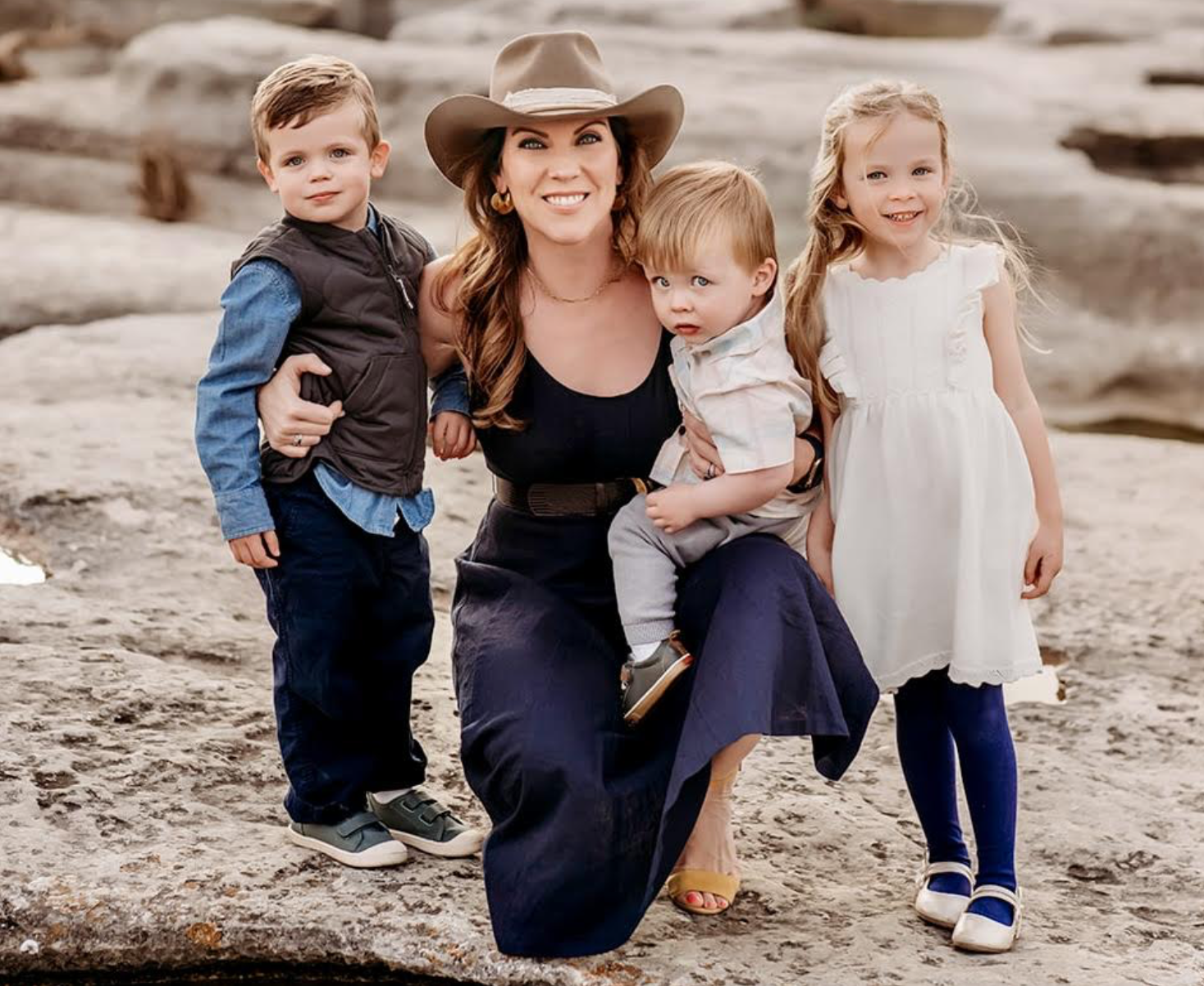
In Conversation with Alexis Contos, Founder of The Breadwinners
Q: The Breadwinners began with a single dinner in Austin and immediately struck a nerve. What did that first gathering reveal to you about the emotional and cultural reality of modern working motherhood?
A: That night at SXSW revealed something I'd been feeling but couldn't quite name: Breadwinner mothers are everywhere, yet we're having the wrong conversation about us.
We brought together 30 women - healthcare executives, tech founders, financial services leaders, artists, entrepreneurs - and within minutes of sitting down, the energy shifted. These weren't women looking for sympathy or strategies to "manage" their impossible circumstances. They were already thriving professionally and deeply present at home, but they'd never been in a room where that combination was celebrated rather than questioned.
What struck me most was the relief. Not relief from exhaustion, but relief from isolation. Every woman there thought she was the only one designing her life this way - earning significant income while refusing to compromise on maternal presence, building companies while building new family models, leading teams while redefining what leadership even means when you're also leading a household.
A guest told me after the event: “That evening was about the secrets we keep as mothers, and there was a shared understanding around the table, the unspoken things that didn’t need to be said, they were just felt. That rarely happens.”
The dinner revealed that we've been operating under a fundamental misunderstanding. The cultural narrative says working mothers are "having it all" (with a wink that means we're delusional) or we're sacrificing one thing for another (with pity that we can't win). But the women at that table weren't doing either. They were integrating rather than fragmenting, and they were exhausted from pretending this wasn't actually working.
The overwhelming response afterward - the messages, the requests for more gatherings, the corporate interest - proved this isn't a niche experience. Forty percent of American mothers are primary earners, representing $2.1 trillion in buying power, and we've been treated like a footnote in conversations about modern motherhood. That dinner made it clear: we're rewriting it all ourselves.
Q: You describe Breadwinners as multi-hyphenate women living integrated lives rather than fragmented ones. Why is integration such a radical concept in how we currently talk about ambition, motherhood, and success?
A: Because the entire infrastructure of modern life was designed around the assumption that people would specialize rather than integrate.
We still operate in systems built for workers who had someone else managing their home lives. The corporate ladder assumes you can prioritize advancement without considering school pickup schedules. Parenting advice assumes you have time for elaborate craft projects and home-cooked meals. Even the language used by society: "work-life balance" - treats professional ambition and family presence as opposing forces that must be carefully weighted against each other.
But multi-hyphenate breadwinner mothers aren't balancing. We're integrating. We're CEO-mother-athlete, founder-parent-advocate, executive-caregiver-changemaker. These aren't separate identities competing for bandwidth - they're interconnected dimensions that actually strengthen each other. My experience negotiating with a toddler makes me better at navigating difficult conversations at work. My strategic thinking at work helps me redesign family systems that weren't built for Breadwinner mothers.
Integration is radical because it rejects the entire premise of choice that's been forced on women for decades. It says: I don't need to be less ambitious to be a good mother, and I don't need to be less present to be a serious professional. It acknowledges that the systems asking us to choose are broken - not us. We haven’t lost our ambition, we’re just redefining what ambition means to us.
When we frame this as integration rather than balance, we stop trying to perfect an impossible equation. We start redesigning the equation itself. That's what makes it threatening to existing structures and liberating for the women living it.
Q: Guilt shows up repeatedly in conversations about working motherhood. How does The Breadwinners actively help women replace guilt with confidence across both their professional and personal lives?
A: Our entire mission centers on quieting the mental overload that produces guilt. We want every mother in our community to feel less guilty about whether they're raising their children right, spending enough time with them, nurturing their partnerships, taking care of themselves, their health, or doing enough in their careers.
The guilt working mothers carry isn't personal failure - it's systemic design. We've been handed impossible standards from multiple directions, then blamed when we can't meet all of them simultaneously. The Breadwinners replaces that individual burden with collective truth-telling and strategic support.
First, we celebrate rather than apologize. When you see yourself reflected in stories of women who are thriving financially AND deeply present with their families, guilt loses its grip. You realize you're not failing at something everyone else figured out - you're pioneering something most people haven't attempted.
Second, we share the actual systems and strategies that make this sustainable. Not generic advice about "self-care" or "finding balance," but real conversations about childcare logistics, partnership negotiations, career pivots, and the uncomfortable trade-offs we all navigate. When you hear how a successful founder structures her week or how a healthcare executive handles school closures, you gain practical tools instead of just aspirational platitudes.
Third, we're building what we call your "digital Breadwinner tribe" - bringing expert voices directly to our community. Female hormone specialists, pediatric nutritionists, negotiation experts, marriage counselors, financial planners. All the specialists you need to support all of who you are, because being a Breadwinner isn't just about the paycheck. It's about thriving across dimensions.
Most importantly, we create spaces where Breadwinner mothers can share the secrets we don't post on social media. The dinners, the podcast conversations, the community - these are places to talk about the moments we're not proud of, the systems that failed before they worked, and the help we were afraid to ask for. That vulnerability, shared collectively, transforms guilt into connection and confidence.
Q: Breadwinners are not just succeeding within existing systems, you position them as system-changers. Which cultural narratives or structures do you believe most urgently need to evolve to support multi-dimensional women?
The workplace infrastructure needs complete reimagining. We're still operating under industrial-era assumptions that productivity requires physical presence during set hours, that leadership means being "always on," and that career advancement requires choosing work over everything else during your prime childbearing years. Breadwinner mothers are proving these assumptions wrong daily, but they're exhausting themselves doing it because the structures haven't caught up.
The domestic labor expectations need radical redistribution. We've added women to the workforce without subtracting any of the household and emotional labor they were already carrying. Breadwinner mothers are often the primary earners AND the default parent AND the household manager AND the schedule coordinator. That's not integration - that's exploitation of the fact that women have been socialized to say yes to everything.
But beyond individual structures, the narrative itself needs transformation. We need to stop talking about working motherhood as sacrifice or compromise. The research already shows us the truth: children of working mothers earn more, contribute more to household labor, and show better emotional development. Companies with diverse leadership outperform their competitors. Breadwinner mothers aren't making trade-offs - they're creating upgrades.
Most urgently, we need to evolve past the zero-sum framing that says supporting Breadwinner mothers somehow diminishes other mothers' choices. The systems we're changing - flexible work structures, equitable domestic labor distribution, childcare support, expectation management - these benefit all families. When we celebrate one path, we're expanding possibilities, not limiting them.
The cultural narrative that most needs to change is this: that mothers must choose between being providers and being nurturers. We can be both. We are both. And the sooner our workplaces, partnerships, policies, and cultural conversations acknowledge that reality, the sooner we stop burning out the women who are already doing it.
Q: The Breadwinners rejects the idea that women must choose one identity over another. For a woman who sees herself in this both-and reality but still feels stretched or unseen, what do you hope she feels the moment she joins your world?
Relief. Not the relief of having solved everything, but the relief of finally being seen for what she already is - whole.
I hope she feels the immediate recognition that she's not alone in this specific experience. That there are thousands of other women navigating the same integration, facing the same structural obstacles, and refusing the same false choices. The isolation so many Breadwinner mothers feel isn't about lacking community - it's about being in communities that don't quite reflect this particular reality.
I hope she feels celebrated rather than questioned. That the first response to "I'm the primary earner and deeply present with my kids" isn't skepticism about how she's managing or concern about what she's sacrificing, but genuine appreciation for what she's building and pioneering.
I hope she feels permission to stop apologizing. Permission to be ambitious without justification. Permission to earn significant income without guilt. Permission to redesign systems that don't accommodate her instead of contorting herself to fit broken structures. Permission to have seasons where work demands more and seasons where family needs more, without treating either as failure.
I hope she feels equipped with practical strategies from women who've actually done this, not theoretical advice from people observing from the outside. Real schedules, real trade-offs, real partnerships, real childcare solutions, real career navigation. The unsexy logistics that actually make integrated lives sustainable.
Most of all, I hope she feels less stretched - not because we're reducing what she's carrying, but because we're expanding the definition of what counts as success. When you stop trying to meet impossible standards and start creating your own definition of thriving, that stretched feeling transforms into strength. You realize you're not failing at balance - you're succeeding at integration. You're not dropping balls - you're choosing which ones to catch in each season.
The moment a woman joins The Breadwinners, I hope she feels what those 30 women felt at that first dinner: "These are my people. I can stop explaining myself and start building alongside others who already understand."
Connect With The Breadwinners
Visit The Breadwinners | IG: @wearethebreadwinners | Listen To The Breadwinners Podcast | Email Alexis Contos (Founder of The Breadwinners) at alexis@thebreadwinners.co